
Understanding payslips
EarningsDiscover the key parts of your payslip to check, so you can make sure you’re paid correctly.
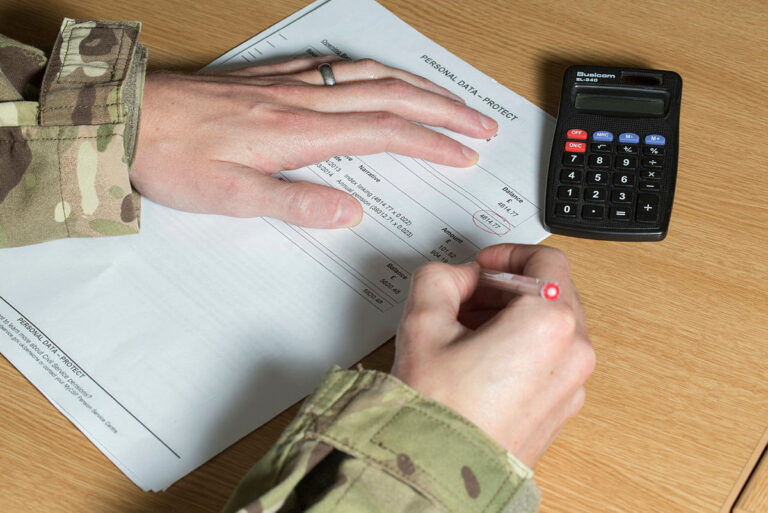
Your payslip is an important tool for understanding your income. It shows: what you’ve earned, what’s been deducted, and the final amount that goes into your bank account. If you’re serving, your payslip is usually accessed through the Joint Personnel Administration system, known as JPA. It shows your military pay, any additional pay or allowances, deductions, and the final amount paid into your bank account. If you’re a military spouse, partner, reservist, or veteran working in a civilian role, your payslip will contain similar information, though the layout may look slightly different. The first thing to check is if the amount you worked is correct. This affects people who might do variable numbers of shifts or overtime. If you see any mistakes here, the first place to go is your employer’s payroll or HR department. For service personnel, if you spot a mistake, you can contact the Joint Personnel Administration Centre or JPAC. You’ll find their details on your payslip.
It’s important to understand the difference between gross pay and net pay. Gross pay is your total salary before deductions. Net pay is what you actually receive after deductions. So, what are these deductions? They’re payments taken from your salary. This could be a payment required by law i.e. tax deductions or through an arrangement with your workplace like a workplace pension. If you’re serving personnel, your payslip may include deductions such as accommodation charges, food charges, mess subscriptions, or loan repayments, depending on your circumstances.
Most working people pay National Insurance if their earnings are above a certain level. National Insurance helps fund state benefits, like the State Pension. Income tax pays for public services such as the NHS, schools, housing and roads. The more you earn, the more you pay. This is where tax bands come in. In the UK, income tax is split into bands. You don’t pay the same rate on all of your income. Every working adult has a tax-free personal allowance. This means there’s a certain amount of money you can earn before you’re taxed. After your personal allowance, your income is divided into chunks, with each chunk taxed at a different rate. For example – your personal allowance, the first portion of your income, is tax-free. The next portion is taxed at a basic rate. Higher portions are taxed at higher rates. That means the more you earn, the more tax you pay overall. This is where tax codes come in.
Your tax code is shown on your payslip. It tells your employer how much tax to deduct. If your tax code is wrong – for example, if you have more than one job, get extra benefits through work, or have recently changed jobs – you could end up paying too much or too little tax. That’s why it’s important to check your payslip and make sure your tax code looks right for your situation. If it doesn’t, you can contact HMRC to get it corrected. HMRC regularly audits tax payments and will issue either a bill or refund if you’ve paid the incorrect amount.
Other deductions that may also appear on your payslip include:
Student loan repayments – if you studied at university and took out a loan, repayments are automatically deducted once your income reaches a certain level, called the threshold. To find out your repayment plan and the amount you should be paying, please visit the gov.uk website.
Pension contributions – if you’re enrolled in a workplace pension scheme, part of your pay goes into your pension pot for your future, and your employer usually adds to the pot as well.
However, armed forces pensions are different. They are non-contributory, meaning you do not pay pension contributions directly from your salary. Your pension builds automatically as part of your service.
For Armed Forces Pension queries, service personnel should contact Veterans UK as they oversee the assessment, award and payment of all armed forces pensions. Independent advice can also be gained from Forces Pension Society accessed via paid membership subscription. There is also the Armed Forces Pensions Calculator on gov.uk.
Your payslip is more than just a record of your pay. It’s a tool to help you understand your money. It shows your gross pay, your net pay, and exactly how much has been taken in deductions. If something doesn’t look right, talk to your employer. And if you’re unsure about what the deductions mean, the official government website is a reliable source of information. Get into the habit of checking your payslip regularly. It’s your guide to making sure you’re being paid correctly.
Docs, Links & Resources
All Armed Forces Modules
Budgeting
Module 1
In this module, you’ll learn how to build a budget that helps you stay in control of rising costs, plan ahead and manage your money with confidence.

Earnings
Module 2
In this module, you’ll learn how to understand your pay, spot any issues early and explore the different ways you can increase your income.

Pensions
Module 3
In this module, you’ll understand how pensions work, including the Armed Forces Pension Scheme, so you can plan confidently for later life.
Managing debt
Module 4
In this module, you’ll learn how borrowing works, what to consider before taking on debt and how to manage repayments.

Credit options
Module 5
In this module, you’ll learn how credit works, what affects your credit score and how to make borrowing choices that support your financial goals.

Mortgages
Module 6
In this module, you’ll learn how home buying works, the factors that shape affordability and how different mortgage options can affect your choices.

Investing
Module 7
In this module, you’ll learn how investing helps your money grow over time, how it differs from saving and how to make informed investment decisions.