How borrowing works
Managing debtFind out how borrowing works, the main ways to borrow money and how APR can help you compare the cost of credit.
When borrowing, a crucial concept to consider is the APR, which stands for annual percentage rate. This is the cost of borrowing money over a year. It’s expressed as a percentage, which includes both the interest and other compulsory fees for a loan or credit card.
It’s a crucial figure for comparing different credit products, as a higher APR means borrowing is more expensive, and a lower APR means it’s cheaper. The rate advertised, known as the representative APR, is the rate offered to at least 51% of successful applicants, not necessarily to everyone.
The APR includes the primary cost of borrowing – also known as interest – and any standard or compulsory fees, including account set up. The APR does not include additional charges or fines you might incur, like late payment fees, cash transaction fees or balance transfer fees. Penalties for going over your credit limit or making late payments are not included.
APR is a useful comparison tool because it provides a more complete picture of the cost of credit than an interest rate alone. Lenders are required to tell you the APR before you sign a credit agreement, ensuring you have a clear understanding of the overall borrowing costs.
A common form of borrowing is an overdraft, which is when you spend more money than you have deposited from a bank account. There are two main types: An arranged overdraft is one that you’ve agreed with the bank before using. Often the bank offers you this, but sometimes you’ll have to ask them first. It’s the cheapest type of overdraft.
An unarranged overdraft is when you spend more than you have without asking first. The bank covers it, but they’ll probably charge you more for the trouble, so this type is more expensive than the arranged overdraft.
Overdrafts can be useful if you need a quick back up, but if you lean on them too much, the bank keeps charging you while you’re using it and it almost certainly won’t be the cheapest way to borrow. If you’re earning and spending the same amount each month, without clearing the overdraft, you’ll slowly creep further into it until it becomes a much larger problem!
Credit cards are another common form of borrowing. These can be with your bank or with another provider. Unless you’re on a 0% deal or completely clear the balance, any money you spend on a credit card will have a charge.
You get a card that looks like a normal bank card and a credit limit, which the provider offers you based on a range of factors, including your income and your credit rating.
A credit limit is the agreed amount you can owe on the card when you take it out. Staying under the credit limit means that the total of what you’ve spent, plus any interest or charges the provider has added, never exceed this agreed amount. Sometimes borrowers can confuse a credit limit with a spending limit – but then the provider will add the fees and charges you agreed to and the total can take you over the agreed maximum .
Credit card interest has no legal cap but common rates can range from 0% right up to 25% APR. Comparison websites can help you find the best deal.
If you are serving or have served in the armed forces, building up or maintaining a credit history can sometimes be more difficult. Frequent moves, overseas postings, or using a British Forces Post Office – or BFPO – address can mean lenders’ systems don’t always recognise your address history in the same way as civilian addresses.
If you’re applying for credit, it can help to explain your circumstances clearly. Applying in person or over the phone, where possible, allows you to explain postings or overseas service directly.
Major UK lending organisations have agreed that service personnel should not be disadvantaged because of their occupation. Applications should be treated fairly and must not be automatically rejected simply because a BFPO address is used.
With credit cards you’re offered three main ways to repay. Firstly, you can pay off the whole balance in one go (clearing everything you owe). This is the cheapest option, often free if you pay in the same month you borrow.
Secondly, you can pay the minimum amount which is set by your provider. This is often where problems can arise, as the minimum amount often isn’t enough to stop big credit card debts from growing rather than shrinking. The provider adds interest every month, and sometimes the minimum doesn’t cover this, so you end up owing more with each month that passes.
This is when the concept of compound interest works against you. You can learn about compounding in more detail in another one of our videos.
The third option is to pay more than the minimum – an amount you choose that covers the minimum plus something extra. This is usually the best approach if you’re trying to clear a balance quickly, but cannot clear the full balance. The more you can add on top, the faster your debt will fall.
Using a credit card occasionally isn’t a cause to worry, but if you’re finding that you are struggling to pay the minimum, you should call the provider early to discuss your options- you won’t be the only person in this situation and they are trained to deal with queries like this.
Personal loans are a financial product that is separate to your bank account or a credit card. You ask a lender to borrow a certain amount, they go away and do some checks on you before confirming this amount, or sometimes offering you a different sum.
There’s always a cost involved in personal loans reflected in the APR. When you take one out, you agree to pay it back in regular instalments, usually by paying a set agreed amount each month. It is worth doing a lot of research before taking out a loan like this and note that in some cases, particularly if you need under £3,000, a credit card may be cheaper.
Borrowing can be useful, but different products work in different ways. So it’s worth understanding which is right for you before you use them. By checking the APR and thinking carefully about how you’ll repay, you can borrow with more confidence and stay in control of your money.
All Armed Forces Modules
Budgeting
Module 1
In this module, you’ll learn how to build a budget that helps you stay in control of rising costs, plan ahead and manage your money with confidence.

Earnings
Module 2
In this module, you’ll learn how to understand your pay, spot any issues early and explore the different ways you can increase your income.

Pensions
Module 3
In this module, you’ll understand how pensions work, including the Armed Forces Pension Scheme, so you can plan confidently for later life.
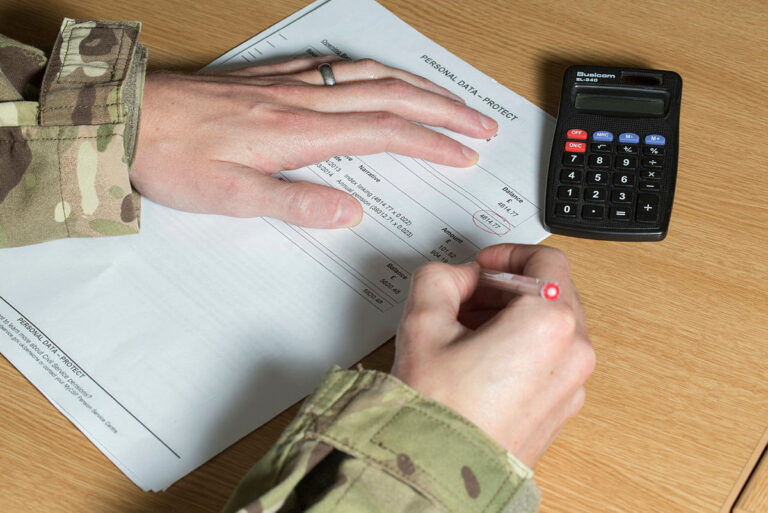
Managing debt
Module 4
In this module, you’ll learn how borrowing works, what to consider before taking on debt and how to manage repayments.

Credit options
Module 5
In this module, you’ll learn how credit works, what affects your credit score and how to make borrowing choices that support your financial goals.

Mortgages
Module 6
In this module, you’ll learn how home buying works, the factors that shape affordability and how different mortgage options can affect your choices.

Investing
Module 7
In this module, you’ll learn how investing helps your money grow over time, how it differs from saving and how to make informed investment decisions.